
The Options Beyond the List
Sometimes the third option isn’t just a path—it’s a shift in meaning.

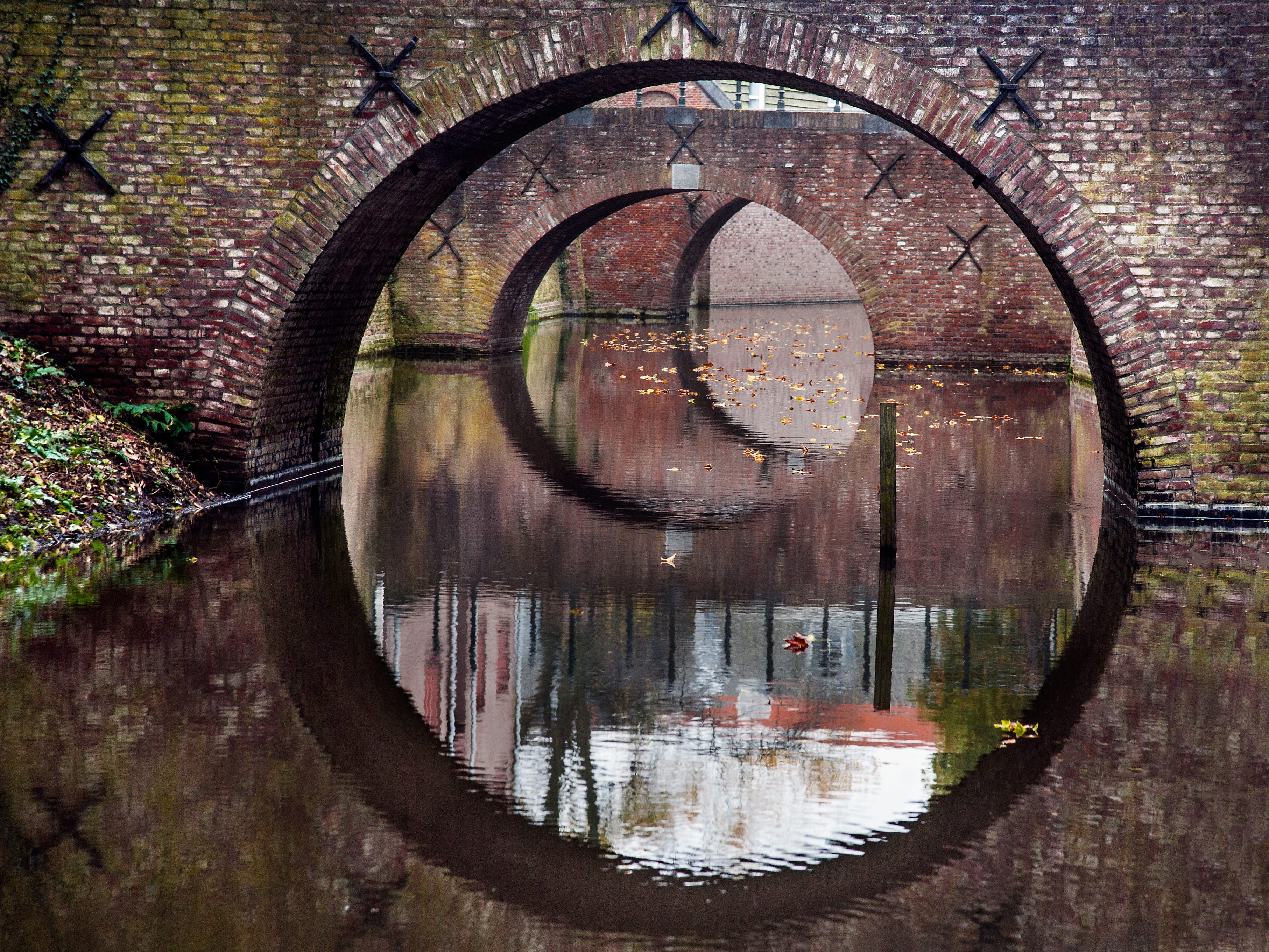
I’ve come to understand that the best metaphor for a decision is a bridge.
In part because of the logical element. A decision is what enables you to go from where you are to what is next. But it’s the complexity of the bridge that makes this such a clear metaphor.
Not all bridges are the same. There are many factors involved for each of them.
What is the bridge going to span? And what length span will be needed?
How will the bridge be crossed? Is this for pedestrians? Railcars? Other forms of transport?
What hazards and safety factors are going to need to be addressed?
What kind of tolerance will it need in order to be able to sustain the crossing?
Is the bridge itself going to cause any kind of impediment that will need to be addressed, such as traffic patterns beneath it?
I’m sure, as you read those questions, you can see how those same factors will be part of any significant decision we make.
When we left Cooper North last week, he had eliminated one type of bridge, but the need to figure out his crossing remains.
The financial distress of his business hasn’t gone away. The shifts in his market haven’t shifted back. His team, while holding on for the moment, isn’t assured.
Let’s look at some of the questions he’s facing in this moment:
Do I rebuild this… or release it?
He seems to have crossed that bridge, but there may be more to examine.
If I do rebuild this, what does that mean?
Bridge 1: Continue as is, optimize, try to stabilize?
Bridge 2: Restructure around a clearer purpose?
Bridge 3: Let part of it go to make something else possible?
As we look at those options, this isn’t just a list.
What would this mean for Cooper and his company:
The first bridge is what he would choose if he were still trying to fix the current story.
The second bridge is what he would choose if he were willing to rewrite that story.
The third bridge is what he might choose if he’s willing to craft a completely new story.
The third bridge isn’t just another path. It changes what the decision means.
Why does he need to examine this?
All three choices assume the business stays at the center. That’s logical and reasonable.
All three choices are reactions to what already exists and will require some level of transition, no matter which one they choose.
None of them question why this business exists in the first place
The question that helped Cooper eliminate the first bridge he was considering came from an earlier conversation with Ellis.
What would you be doing about the company’s future right now if you hadn’t answered that telephone call?
Ellis is going to challenge him with a new question this week that will be just as illuminating for Cooper.
Let’s join them.
Cooper found Ellis right where he had left him.
Same chair. Same light coming through the window.
As if nothing had moved.
Ellis smiled in greeting but didn’t get up. He just motioned for Cooper to take the chair opposite him.
But Cooper didn’t sit right away. He paced instead.
“Ellis, I think I’ve got it,” he said.
Ellis looked up, not surprised. Not expectant. Just present.
Cooper pulled some folded pages from his jacket and sat across from him.
“There are really two ways to go,” he said. “Maybe three.”
Ellis said nothing.
“I can keep it as it is—tighten things up, cut what’s not working, stabilize it. It would take some time, but it’s doable.”
He tapped the page lightly.
“Or… I step back and rebuild it around what actually matters now. Strip it down, redefine it, bring it back into alignment with what it was supposed to be in the first place.”
He paused, then added:
“There’s probably a way to do both. A hybrid. Keep what works, change what doesn’t.”
Ellis nodded once, as if acknowledging the shape of it.
Cooper finally sat and leaned back slightly. Not relaxed, but steadier.
“I think that’s the direction,” he said. “One of those, anyway.”
Ellis studied him for a moment.
“You’ve put a lot of thought into what you could do with it.”
Cooper exhaled, almost a quiet laugh. “I have.”
Ellis tilted his head slightly.
“You’ve assumed it stays.”
The words didn’t land hard.
But they didn’t pass through, either.
Cooper frowned. “What do you mean?”
“The business,” Ellis said. “You’ve built your thinking around what to do with it. Not whether it’s meant to stay at all.”
Cooper shifted in his seat.
“It’s not really a question of that,” he said. “This is what I’ve built. What we’ve built.”
Ellis didn’t challenge the statement. He let it sit.
Then—
“If you didn’t already own it,” he said, “would you choose it?”
Cooper didn’t answer right away.
Ellis continued, his voice even.
“Let me ask you something differently.”
He leaned back slightly, eyes still on Cooper.
“If you knew—without question—that ten years from now you would have moved on from this…”
A small pause.
“…what would you build between now and then?”
It seemed as if even the room held its breath at the question.
Cooper looked down at the pages in his hands, then back up.
“That’s not really how it works,” he said. “You don’t build something planning to leave it.”
Ellis gave the faintest hint of a smile.
“Don’t you?”
Silence stretched for a moment.
Then, more gently:
“And more importantly… what would need to be true before you did?”
Something in Cooper’s expression shifted—not clarity, not yet—but recognition.
As if the question had found something he had been blind to.
He looked past Ellis for a moment, toward the window, the light now lower than when he’d arrived.
“I’ve been trying to figure out how to fix it,” he said.
Ellis didn’t respond.
Cooper let out a breath.
“But that’s not really it, is it?”
Ellis held his gaze, steady.
Cooper looked back down at the pages, then slowly folded them again.
He didn’t put them away.
Not yet.
“I thought I was deciding what to do with it,” he said.
A longer pause this time.
“I think I’ve been deciding what I need it to be.”
Ellis nodded, just once.
Cooper sat with that.
The answers he’d brought with him hadn’t disappeared.
But they no longer felt like answers.
Is he building something to hold onto… or something to hand off?
“If you knew—without question—that ten years from now you would have moved on from this… what would you build between now and then?”
Reflections
In this conversation with Ellis, Cooper finds himself confronting a different chasm that will require a bridge for him to continue.
These are the new questions Cooper is confronting:
Is he building for continuity… or contribution?
Is he the center of it… or a chapter in it?
Is he protecting something… or preparing something?
Now he understands what is really at stake.
The past might hold clues to why it exists, but those need to be interrogated.
The present is where he’s going to need to build the bridge, but before he does that, he needs to know what it’s for.
Not just for now, but for the future.
Let’s look at this for us.
What decision are we actually making right now?
As we look at our work, what we are investing our time and talents in, are we more focused on what that contributes or how we can have security that it will continue as it is?
Is our body of work something that can be built outside of us so that our role is of stewardship vs. ownership?
When we look at the future, beyond our work, what is it making possible beyond our lives?
If you are new to The Possibility Factor, this publication offers a behind-the-scenes look each week at the book I’m currently writing under the same working title.
Our central character is Cooper North, a business owner who is at a crossroads and learning that much of what he thought he knew isn’t giving him the answers that he needs. An unexpected mentor gives him a journal—one that isn’t offering answers, but better questions.
Thank you Kathi!